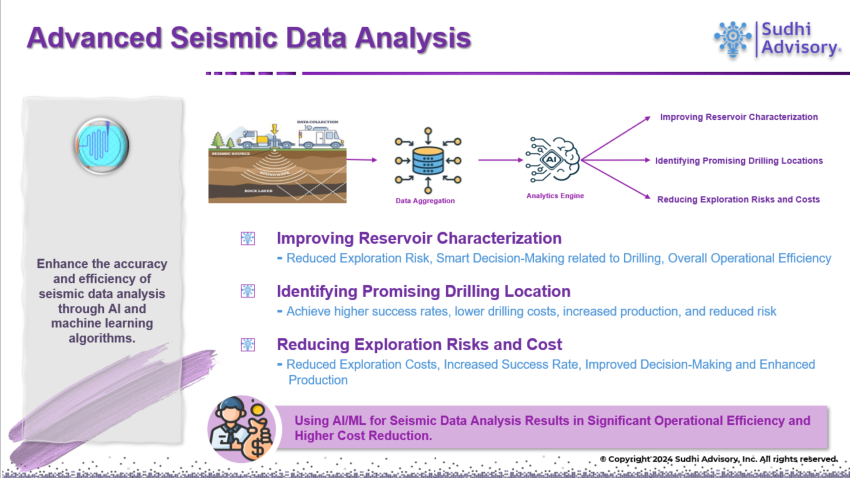
Advanced seismic data analysis provides significant advantages in the upstream oil and gas industry by reducing risk, optimizing operations, and increasing efficiency throughout the exploration and production lifecycle.
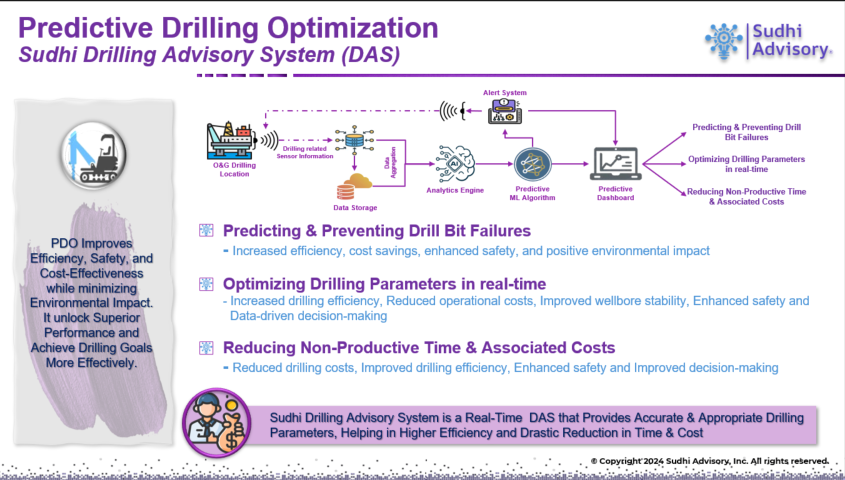
Predictive drilling optimization uses AI and ML to analyze real-time and historical data to forecast potential issues and optimize drilling parameters. This proactive approach offers significant advantages in the upstream sector, primarily by reducing costs, increasing efficiency, and improving safety.
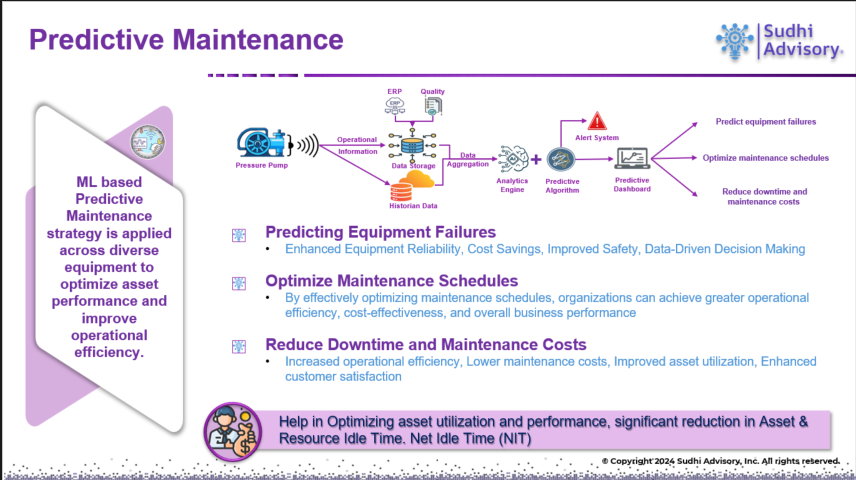
Predictive Maintenance systems collect data from sensors, use machine learning, and AI to forecast when equipment will need maintenance. In the upstream oil and gas sector, this approach provides a significant competitive advantage over traditional, time-based, or reactive maintenance.
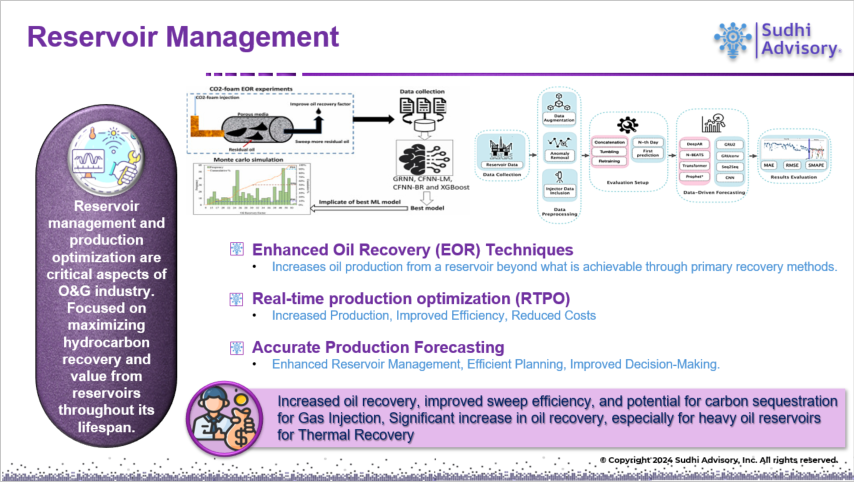
AI-based reservoir management systems offer significant advantages in the upstream oil and gas sector by leveraging data-driven insights to optimize every stage of a reservoir’s lifecycle. These systems move beyond traditional, physics-based simulations to provide faster, more accurate, and more comprehensive analysis.
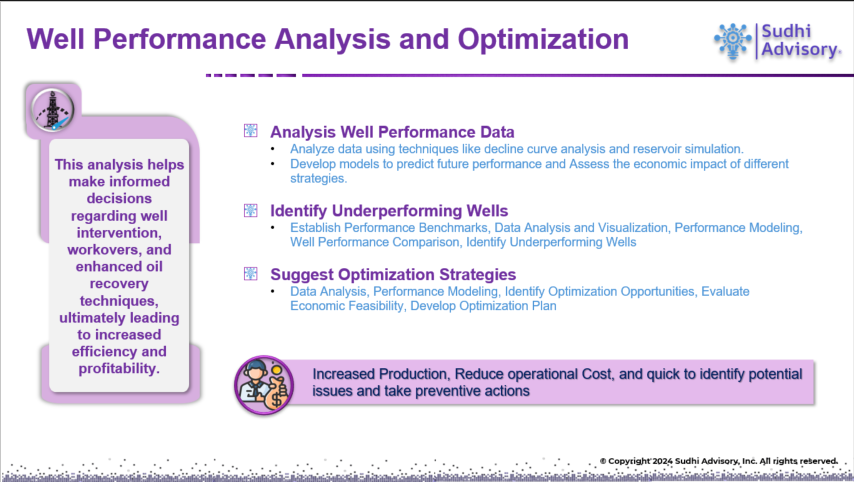
AI/ML-based well performance analysis and optimization systems use real-time data from sensors and machine learning algorithms to maximize hydrocarbon recovery and operational efficiency. It proactively identify potential equipment failures, optimize production parameters, and automate workflows, leading to reduced non-productive time and significant cost savings.
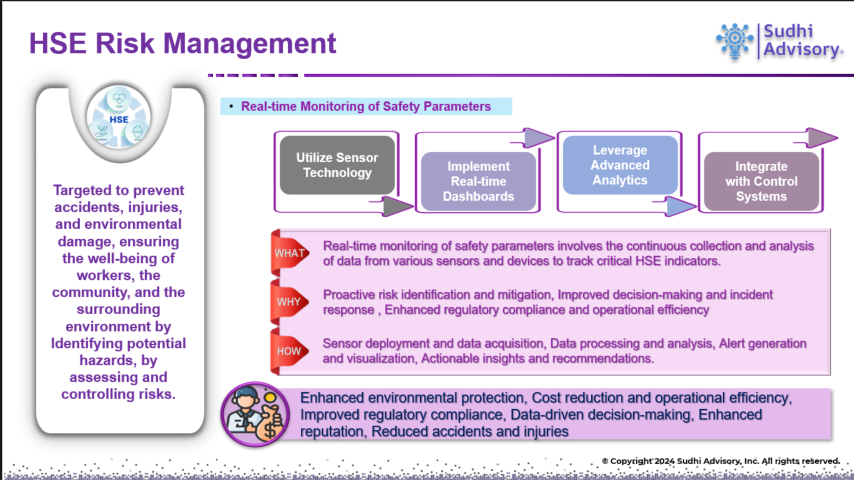
Automating the HSE (Health, Safety, and Environment) risk management process in the upstream sector significantly Reduces human error, enables real-time monitoring of hazards, and accelerates response times to potential incidents. This proactive approach enhances safety protocols, improves regulatory compliance, and ultimately protects personnel and the environment.
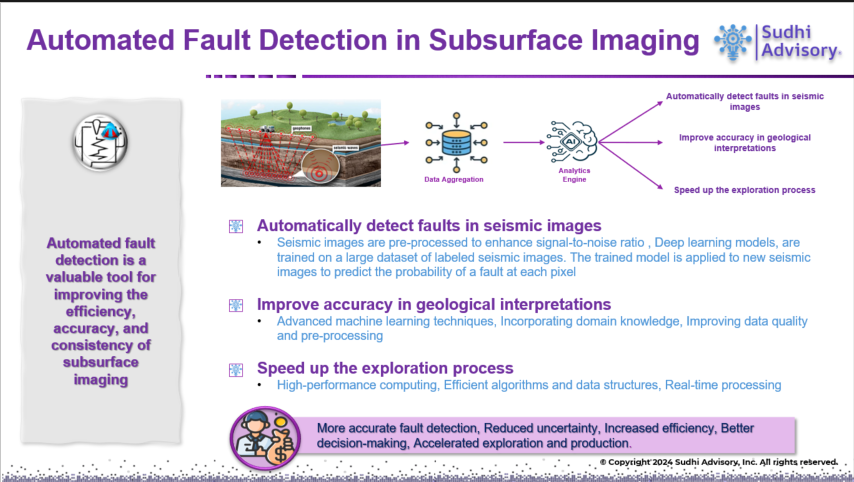
Automated fault detection in subsurface imaging uses AI and machine learning to rapidly and accurately identify faults and fractures in seismic data, which are critical for understanding hydrocarbon fluid flow. This process drastically reduces the time and human bias associated with manual interpretation, leading to more precise geological models and optimized well placement.